- Your cart is empty
- Continue Shopping


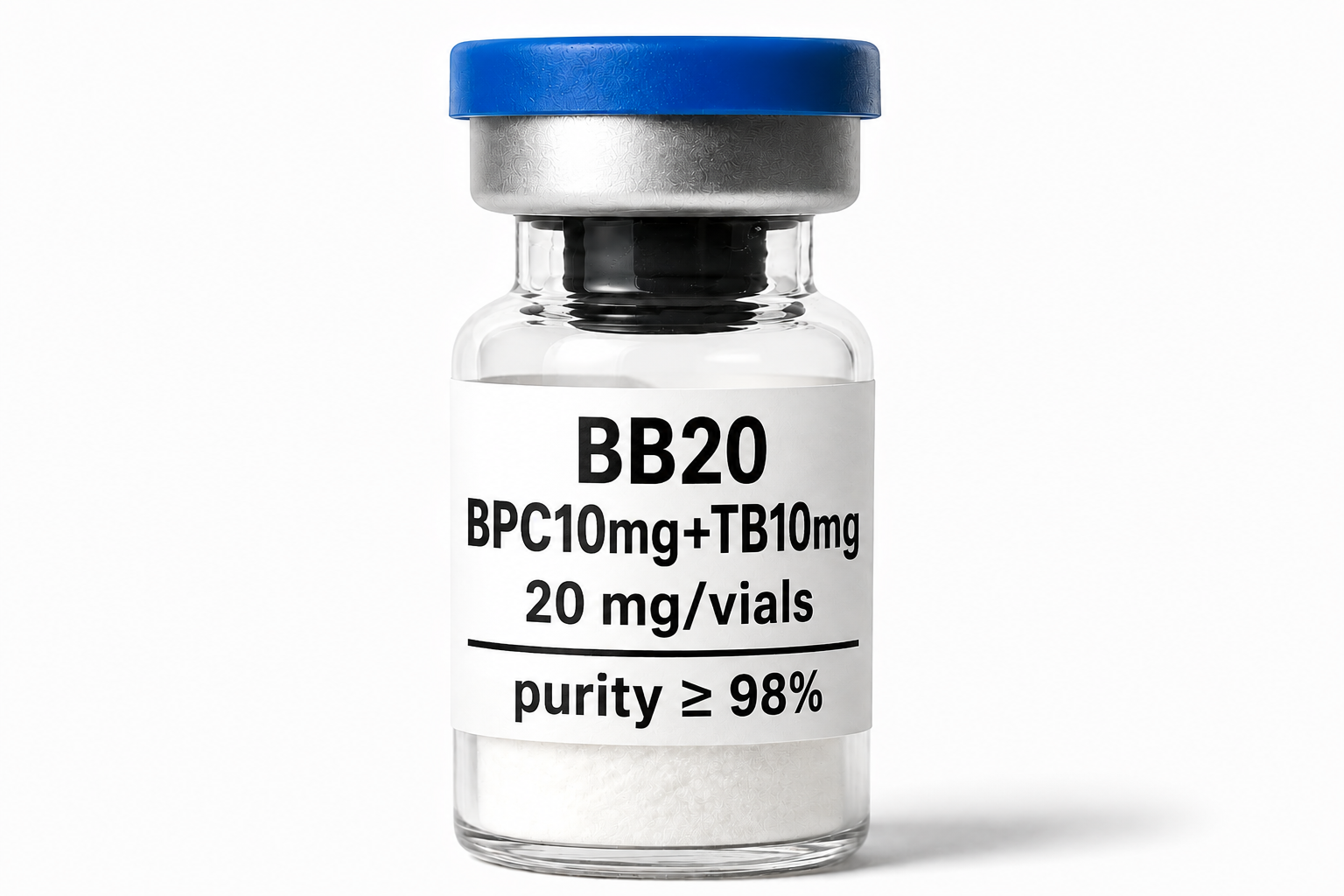

Price range: $125.00 through $250.00
BPC-157 and TB-500 (thymosin beta-4–derived fragment) have gained increasing attention in research settings for their regenerative and cytoprotective properties, particularly in models of musculoskeletal injury, vascular dysfunction, and organ damage.[1–4,7–11] While most data come from animal and in-vitro studies, a growing body of reviews and early clinical observations has highlighted their potential relevance for tissue repair, inflammation modulation, and recovery support.[1,5,6]
Animal studies have demonstrated that BPC-157 promotes angiogenesis, accelerates tendon and muscle healing, and may protect internal organs from damage.[1–4] For example, BPC-157 has been shown to speed healing of transected rat Achilles tendon and improve myotendinous junction recovery in muscle–tendon–ligament models.[2,3] Additional work suggests protective effects in gastrointestinal, vascular, and spinal cord injury models.[1,4]
TB-500, a synthetic fragment based on thymosin beta-4, has shown the ability to enhance wound closure, re-epithelialization, and tissue remodeling in preclinical models.[7–9] Thymosin beta-4 has been reported to increase angiogenesis, modulate inflammation, and favor more organized collagen deposition, supporting more functional tissue repair.[7–10]
Human clinical trials with BPC-157 and TB-500 remain limited, and most available data come from case reports, observational use, and small exploratory experiences. A recent narrative review in orthopaedic sports medicine describes BPC-157 as a promising but still experimental agent, with only early, small-scale human observations (e.g., chronic knee pain) reported to date and no large randomized controlled trials completed.[5,6] At present, no robust human outcome data exist for the BPC-157/TB-500 combination, and its potential applications in musculoskeletal injuries, post-surgical recovery, and chronic inflammation remain hypothesis-generating rather than proven.
BPC-157 and TB-500 are not approved by the FDA or other major regulatory bodies for medical use in humans. They are typically offered as research-use-only compounds, intended for laboratory, in-vitro, or preclinical work. Any discussion of potential benefits is based primarily on animal and in-vitro research, and further human clinical trials are required to clarify safety profiles, dosing ranges, and long-term efficacy.[1,5,6]
| QUANTITY | 10 mg/vial, 10vial/kits, 20 mg/vial, 10vial/kits |
|---|